Wilberfoss is a thriving, picturesque village and civil parish in the East Riding of Yorkshire. This is the official parish website offering residents and visitors an insight into life in our village. We hope that you will find it useful and informative. We would like to thank Simon Clark of The Moody Child web design company for upgrading our website to a blog format in 2023.
For up-to-the-minute village news, download the latest Wilberfoss Parish Newsletter or check out the Parish Council's Facebook page.
Latest News



Useful Information
Find bus times, local agencies, locations of defibrillators etc
Public Transport

- Plan your journey
- Buy your ticket online
- Track your bus
- Save your favourite timetables and routes
Important Numbers & Website Links
- Power cuts - call 0800 375 675
- Spotted a water leak? - call 0345 1 24 24 24
- Emergency call 999 | Non-emergency call 101
- Crimestoppers call 0800 555 111 (completely anonymous)
- Humberside Police Rural Crime Prevention Guide
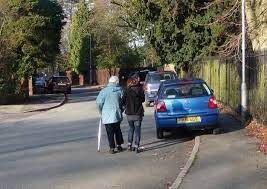
Pavements are not for parking on
For ease of access for emergency vehicles, and to have consideration for residents of the village, please be mindful of where and how you park.
Public Access Defibrillators
Wilberfoss benefits from having three public access defibrillators.
- The first is located on the side wall of the Community Centre on Main Street, YO41 5NN
- The second is on the front facing wall of the Pavilion, off of Storking Lane, YO41 5AB
- The third is fixed to the outside wall of St John the Baptist Church, Beckside, YO41 4NS.
We are also lucky that one of our residents is a Community First Responder.
Parish Council Meetings
Parish Council meetings take place on the third Thursday of every month (unless holiday commitments or sickness force a change), commencing 7:30pm in the Community Centre on Main Street.
A fifteen minute window is offered to members of the public prior to the meeting to address the Parish Council with issues of concern or to refer to items on the agenda. By law, the Parish Council Meeting, although held in public, is not a public meeting. For further details or queries, please contact the Parish Clerk.
News in Brief & Dates for your Diary
- Wilberfoss Parish Council meetings take place at Wilberfoss Community Centre on the 3rd Thursday of every month. These meetings are open to the public.
- The East Riding Local Plan -
Draft Allocation for Wilberfoss
- To assist residents, Wilberfoss Parish Council has drawn up a Boundary Hedge Policy. Click on the link to view.

Neighbourhood Watch
If you see a suspicious vehicle take down any details you can if it's safe to do so.
- Registration Number (or part thereof)
- Colour
- Make and Model
- Details of the driver
- Any signwriting or distinctive features
- Brief description of what you've seen
For the latest updates from Wilberfoss Neighbourhood Watch, to include access to grant funding in order to feel safer, please click here.
Anti-social behaviour
Seen anything? Work with Humberside Police to stop Wilberfoss from being targetted. Ring 101 even if you don't think you can provide much information. Someone else may have reported something that could tie in with your account of the event.
Streetsafe | Police.UK
StreetSafe is a pilot service for anyone to anonymously tell us about public places where you have felt or feel unsafe, because of environmental issues, eg street lighting, abandoned buildings or vandalism and/or because of some behaviours, eg being followed or verbally abused.
Please note: 'StreetSafe' is not for reporting crime or incidents.
Recycle to help our Community
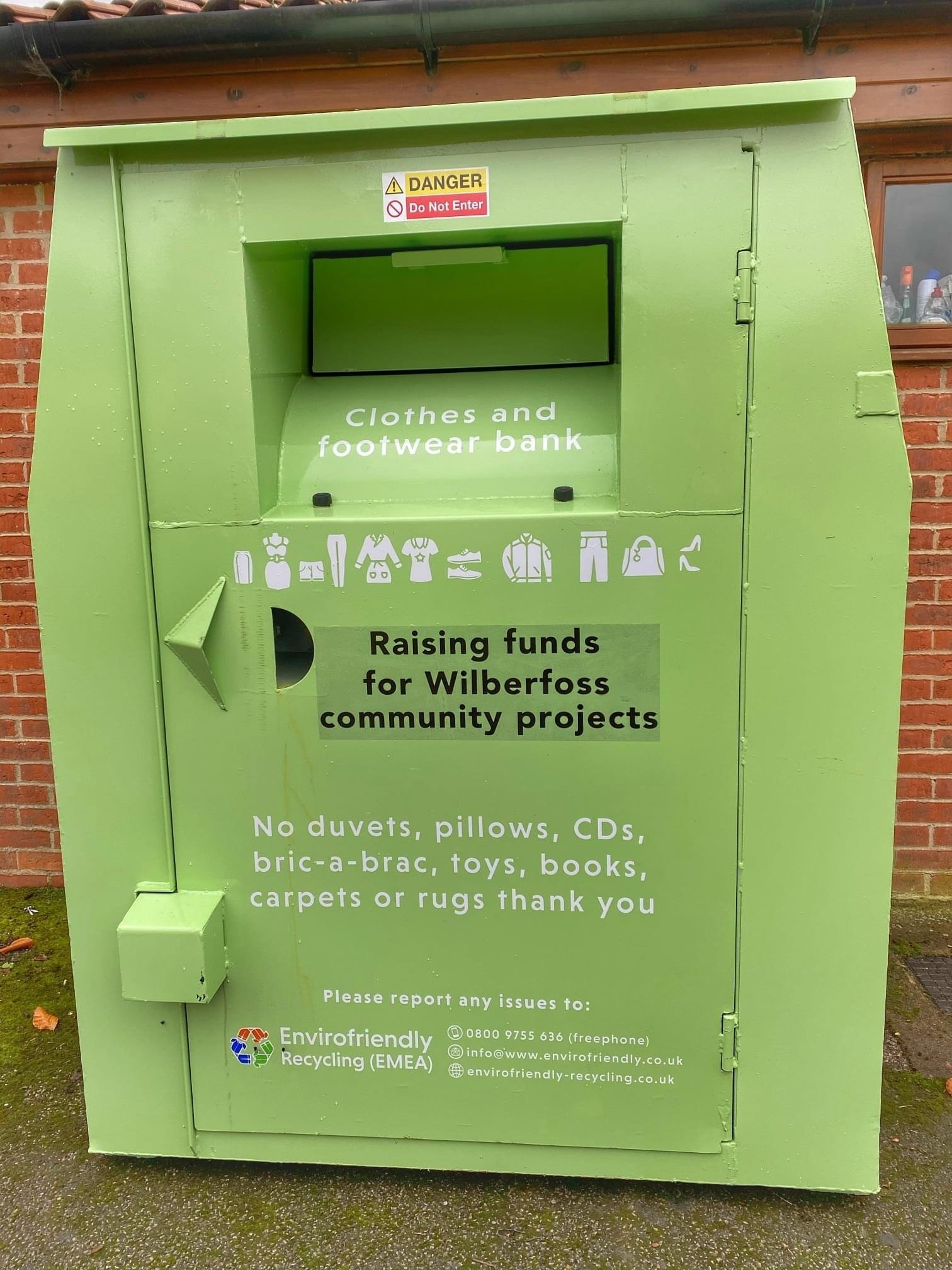
A Textile Bank is located behind Wilberfoss Community Centre and raises funds for the utility costs of the Centre. As a community we are recycling half a tonne of textiles a quarter! Clothes, shoes, hats, scalves, coats, bags and belts can all be dropped off for collection. As long as the items are re-useable, they are sent overseas to be worn again.
Notice Boards
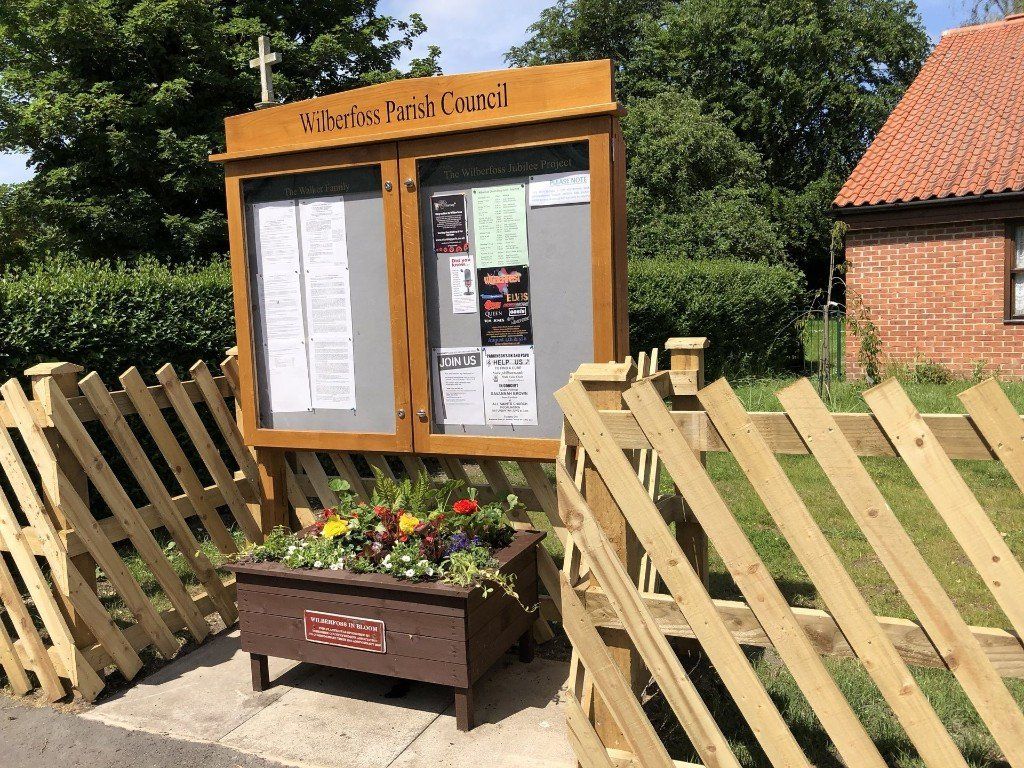
A notice board, on Main Street, was installed in 2018 from funds raised through the East Riding of Yorkshire Council Recycle Credit Scheme and generous donations from the Walker family and the Wilberfoss Jubilee Project. The left-hand side displays parish information. The right-hand side is open access for use by the community.
A second notice board was erected on Willow Park Road in 2019 using funds from the Tesco Bags of Help scheme and displays parish information.